Walking through a desert in a dream can feel spacious and peaceful, or tiring and uncertain. The landscape may be almost empty, yet small details such as shade, footprints, or a distant landmark become important. To explore the scene, begin with whether you knew where you were going and how you felt about being there.
These are symbolic prompts for reflection, not predictions about travel, relationships, health, or future hardship.
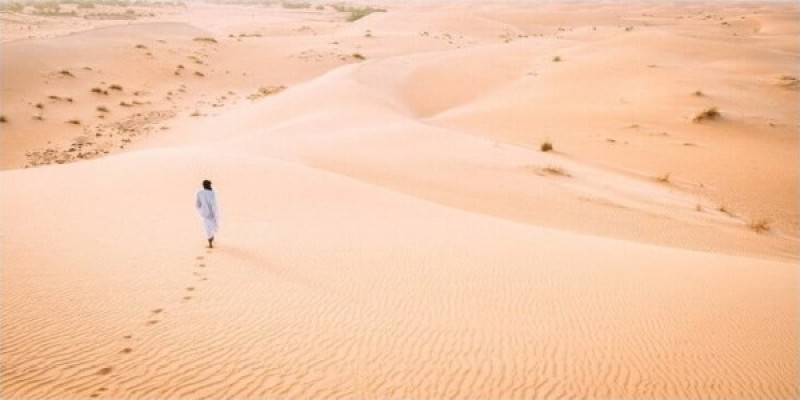
A clear destination across open space
If you knew where you were heading, the walk can offer an image of sustained effort. Notice whether the distance felt manageable and whether you chose the route yourself. A long journey can feel purposeful without being unpleasant.
You might connect the scene with a project that requires steady work over time. If that comparison fits, consider what helps you recognize progress. The dream does not tell you how long a real goal will take or guarantee that persistence will produce a particular result.
Walking alone: solitude or loneliness?
Being alone in a wide landscape can create very different feelings. Perhaps you enjoyed the silence and freedom to set your own pace. Perhaps you wanted company or felt unsure whom to ask for help. Your emotional response is central to the interpretation.
Ask whether the solitude was chosen. A peaceful walk may invite reflection on time for yourself, while an unwanted separation may help you describe a wish for support. Neither scene is evidence that people in your life intend to abandon you.
Losing direction or following uncertain tracks
A desert without obvious landmarks can provide an image of having too little information. Were you searching for a sign, following someone else’s footprints, or changing direction repeatedly? Those choices can be useful when reflecting on a decision whose next steps are unclear.
Keep the comparison practical. If a real decision comes to mind, identify what information would help you make it. The dream itself is not a source of instructions about which path to take, and uncertainty within it is not a moral judgment.
Finding shade, plants, or water
A shaded place or patch of greenery can change the mood of the dream. Notice whether you stopped to rest, shared the place with someone, or hurried past it. The scene may invite reflection on recognizing support and allowing yourself a pause.
Water in the dream need not be treated as a promise of good fortune. What matters is what it made possible within the story: relief, time to think, or the confidence to continue. This is a symbolic reading, not practical desert-travel advice.
Walking with someone or reaching a resting place
A companion can alter the experience of the same landscape. Did you agree on the direction and pace, or did one person keep pulling ahead? Consider what cooperation looked like in the dream and whether you were comfortable asking for what you needed.
Reaching a camp, building, or familiar place may bring a sense of completion, but it can also raise new questions. Were you welcomed? Did you want to stay? The ending of the walk may reveal what kind of arrival you were hoping for.
Reflecting on your dream
Record your destination, companions, and the detail that changed your mood. Then ask whether you currently want clearer direction, more space, or a chance to rest. If the desert recalls a film, a photograph, or an actual journey, include that ordinary association before looking for a larger meaning.
Adapted from Ayteet.net’s Arabic article on this dream, with additional editorial reflection.